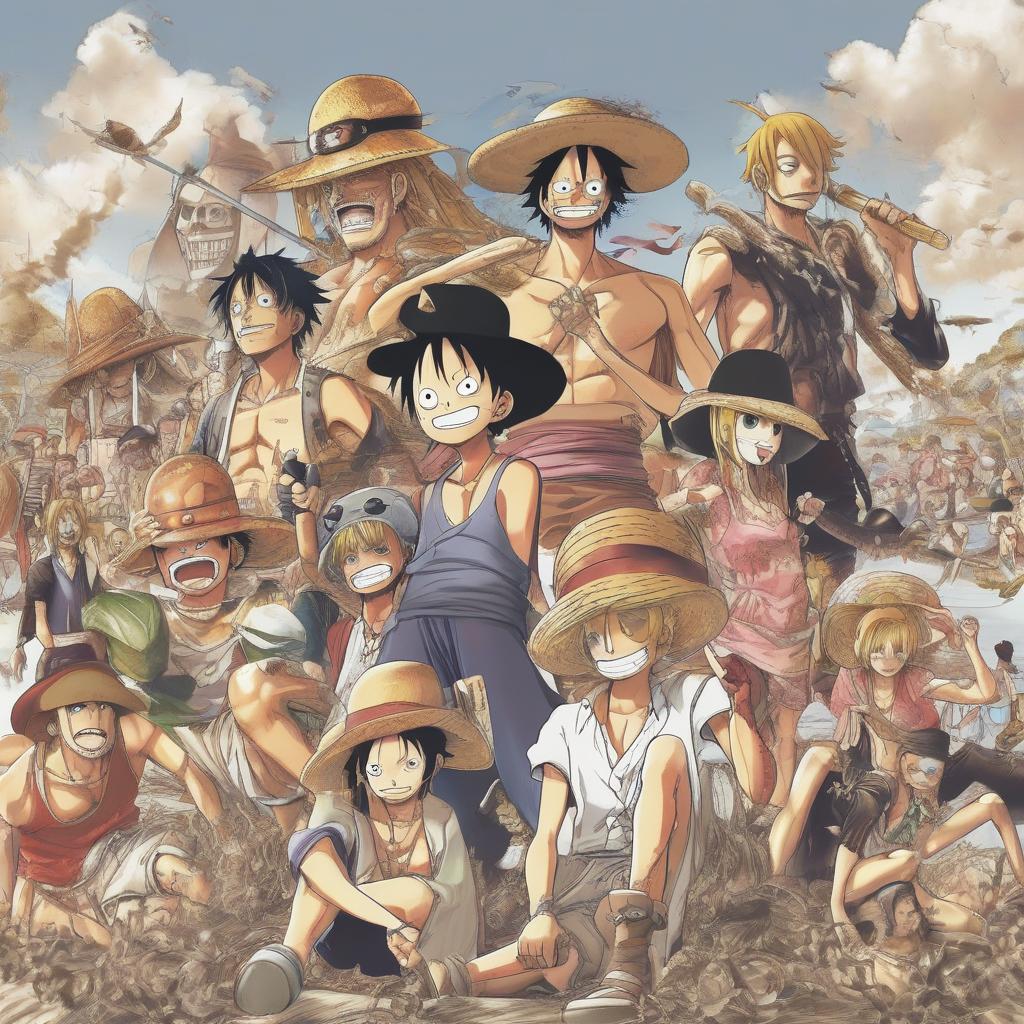
For over two decades, Eiichiro Oda’s “One Piece” has captivated the hearts of millions around the globe. As both a manga and an anime series, it has become a defining hallmark of the shōnen genre, weaving a tale of adventure, camaraderie, and the relentless pursuit of dreams. At its core, “One Piece” is not just an action-packed narrative filled with epic battles and whimsical characters; it is a profound exploration of freedom and the bonds of friendship that transcend the seas.
The story centers around Monkey D. Luffy, a young pirate with the audacious goal of becoming the King of the Pirates by finding the legendary One Piece treasure hidden at the end of the Grand Line. While the premise might suggest a typical adventure tale, Oda delves much deeper. The vast world of One Piece is designed not only as a backdrop for thrilling escapades but also as an intricate tapestry that highlights diverse cultures, ideologies, and unique societal structures.
One of the most prominent themes in “One Piece” is freedom, which is represented as both a personal aspiration and a societal yearning. Luffy’s quest is more than simply a treasure hunt; it symbolizes a break away from oppression and tyranny that many characters in the series face. From the Fish-Man Island arc, where discrimination against fish-men is challenged, to the struggles of Dressrosa’s oppressed citizens under Doflamingo’s tyrannical rule, freedom serves as a powerful motivator. Luffy’s adventures often inadvertently spark revolutions and inspire others to stand up against injustice. This theme resonates deeply with audiences who yearn for liberation and self-determination.
Moreover, the concept of freedom in One Piece is closely tied to the relationships between its characters. The bond among the Straw Hat Pirates epitomizes the essence of friendship, loyalty, and trust. Each crew member, from the wily navigator Nami to the solemn swordsman Zoro, has a unique backstory that reflects their personal struggles and motivations for seeking ultimate freedom. Their individual dreams do not clash with each other; rather, they harmonize into a collective goal. Luffy often emphasizes that his strength lies in his crew, highlighting that freedom is not a solitary endeavor but a shared journey.
The pivotal moments in “One Piece” often revolve around the crew demonstrating unwavering loyalty to one another, whether it be fighting formidable foes or offering emotional support in times of distress. The famous declaration, “I don’t want to conquer anything. I just think the guy with the most freedom in this whole ocean… is the King of the Pirates!” conveys Luffy’s perspective that true freedom comes from forming connections and protecting those you care about.
Furthermore, Oda’s world-building allows us to explore various philosophies regarding freedom. Characters such as Trafalgar Law, who wrestle with their moral compass amid chaotic environments, serve to illustrate the ambiguity of freedom and choice in a complex world. The various factions and ideologies at play — from the Marines to the Revolutionary Army — highlight the conflict between different views of justice and liberty. Oda does not present a black-and-white narrative; instead, he encourages readers to ponder deeper ethical questions about power dynamics and the consequences of one’s choices.
Ultimately, “One Piece” is a celebration of the journey itself. The adventures of Luffy and his crew, filled with laughter, heartache, and exhilarating challenges, resonate with the universal desire for connection and belonging. Each arc serves to enrich not only character development but also the overarching message: freedom is a shared goal enriched by the bonds we create along the way. As the series progresses, the anticipation of uncovering the mysteries of the world serves as a reminder to cherish the moments that define both our individual and collective paths.
In conclusion, “One Piece” is so much more than a tale of pirates; it is an epic saga that entwines the
